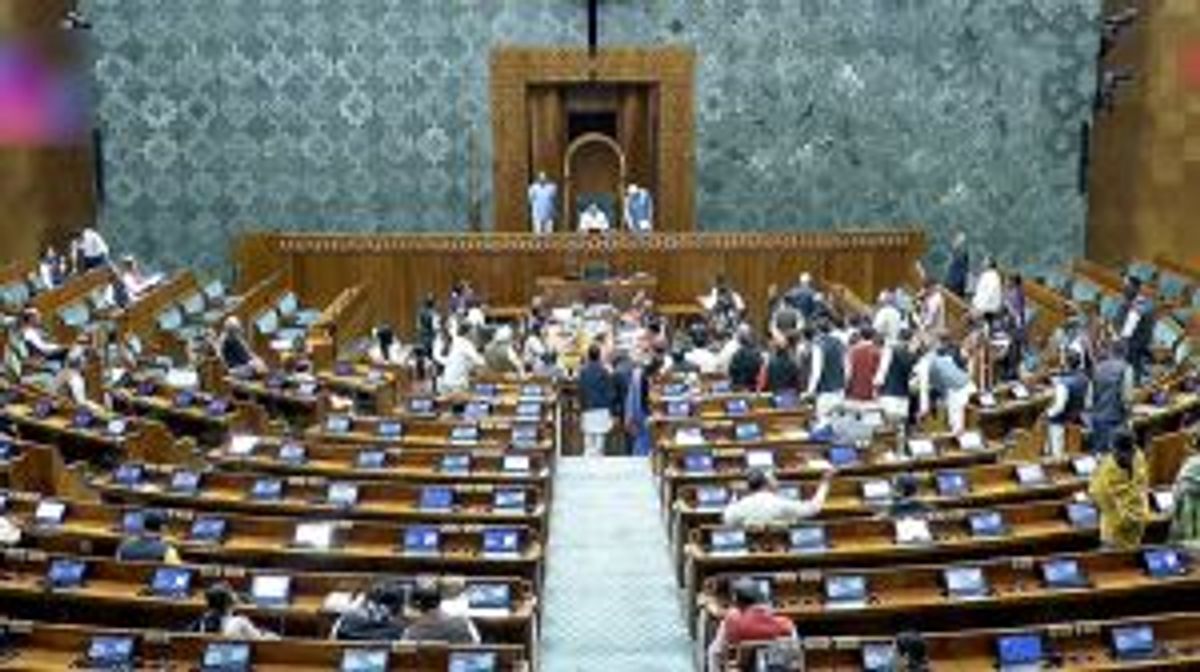
The deadlock in the lower house has ended after successful negotiations between the ruling coalition and the Opposition. The breakthrough was achieved following discussions led by the Speaker and the Parliamentary Affairs Minister, allowing key debates to be scheduled without further adjournments.
What will be debated next week?
A special discussion marking 150 years of Vande Mataram is set for 8 December.
A 10-hour debate on electoral reforms will take place on 9–10 December.
The Opposition plans to raise concerns on the Special Intensive Revision (SIR) of electoral rolls during the electoral reforms session.
How the agreement was formed
1. Om Birla called an all-party meeting after consecutive disruptions stalled the winter session.
2. Government of India, represented by Kiren Rijiju, proposed a sequence — to first discuss Vande Mataram as a national milestone, followed by electoral reforms.
3. Opposition parties agreed to the sequence, treating it as a democratic compromise to restore parliamentary function.
4. Both sides ensured the electoral reform debate would be broad — giving space to discuss transparency, roll accuracy, and voter-list revision issues.
Why both sides accepted
The ruling side aimed to resume legislative business and highlight a historic national theme.
The Opposition secured guaranteed floor time to voice electoral-roll concerns without demanding a separate standalone SIR debate.
What to expect next
The proceedings are likely to remain stable, but the electoral reform debate may turn intense with sharp exchanges over roll accuracy and the SIR process.
Multiple reform areas like election funding, voter roll transparency, and administrative safeguards are expected to be discussed.